
Research needs
its context.
A model can produce a signal without producing a trustworthy decision. The hard part is keeping the evidence date, trading costs, failed ideas and reasons to stop in the same view as the opportunity.
A public research record for six paper-trading engines, with dated verdicts, execution context and no live-capital claim.
Explore TradeMaster case study (opens in a new tab)Current status: Public research and paper-trading case study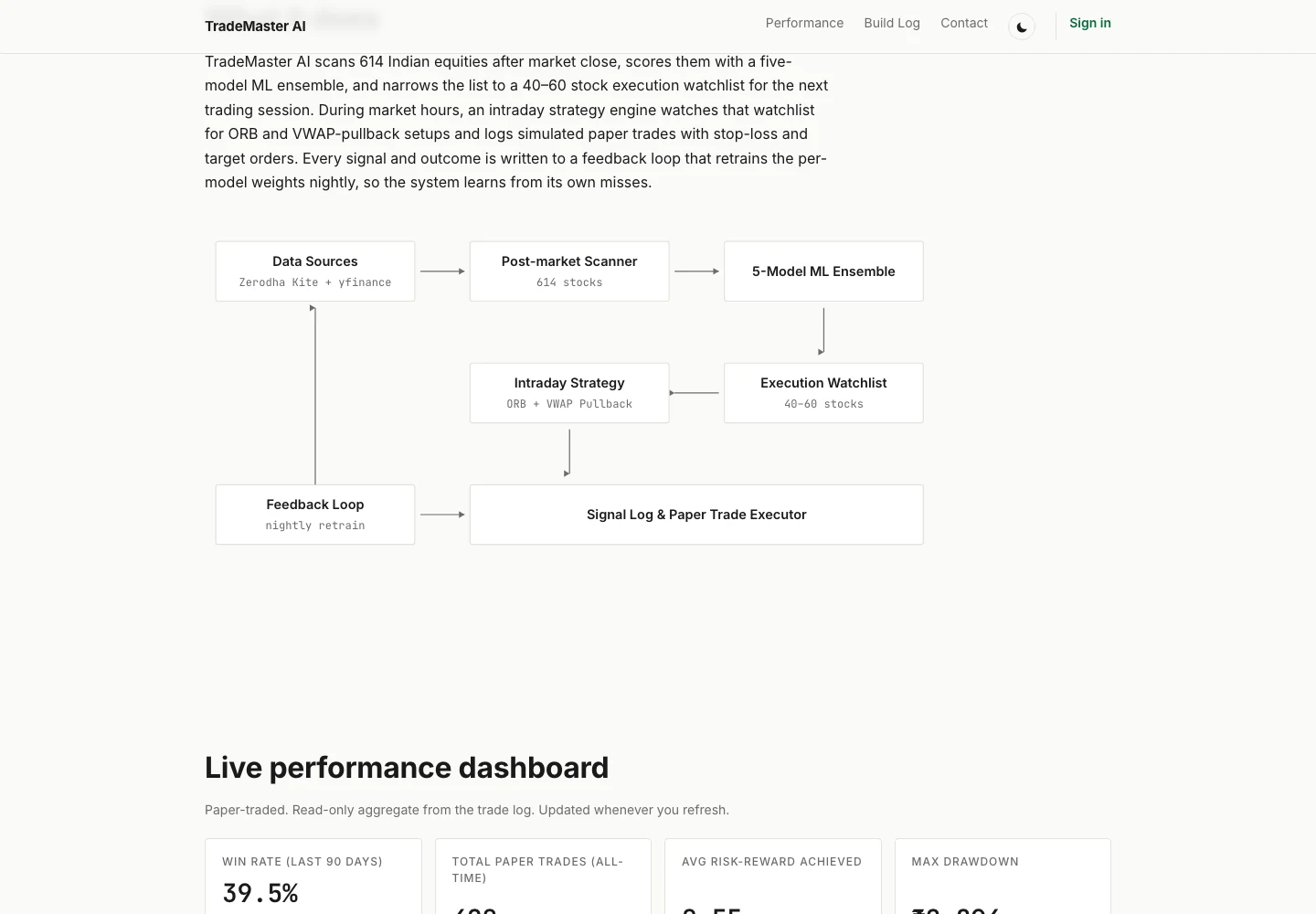
Three views.
One dated record.
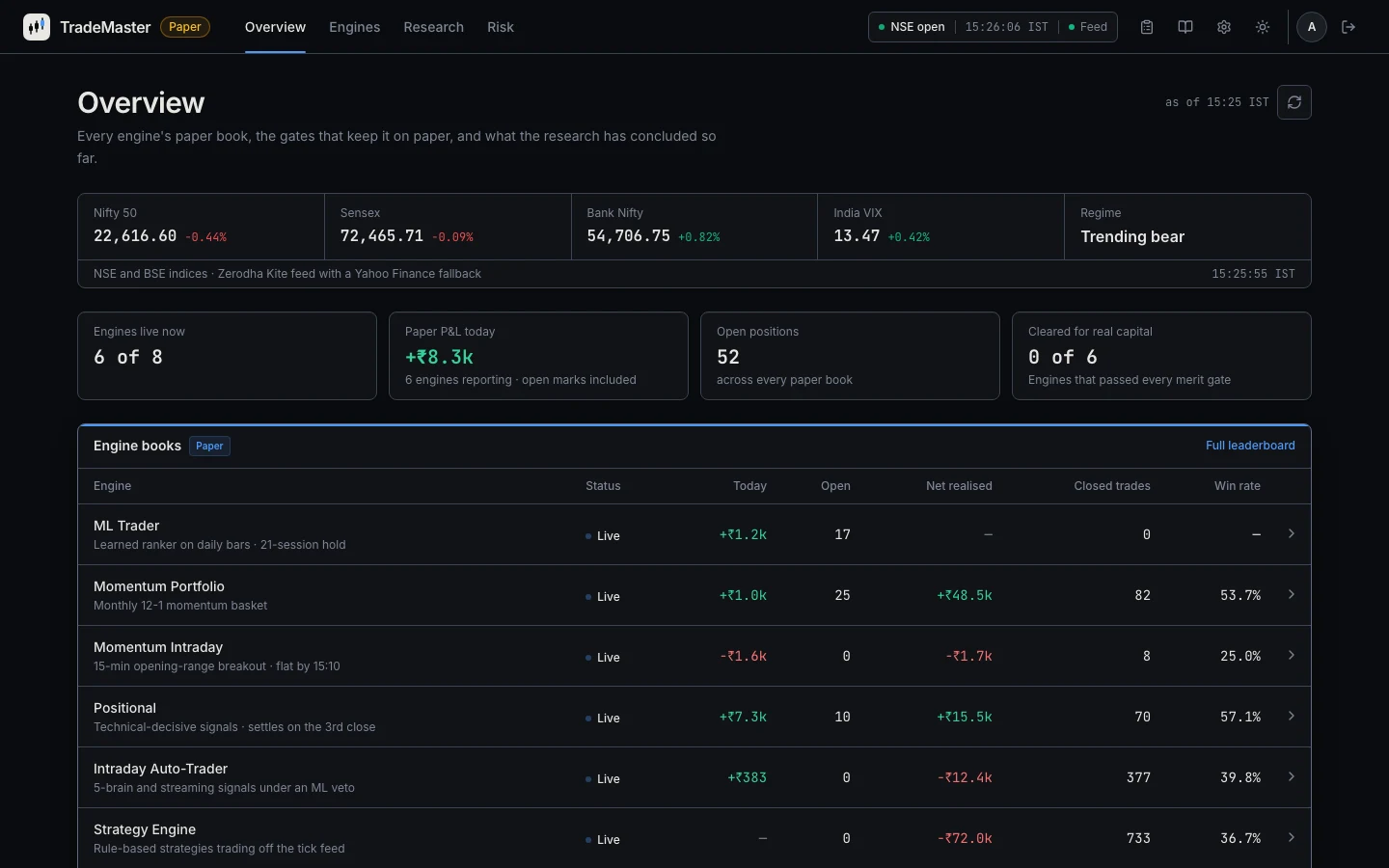
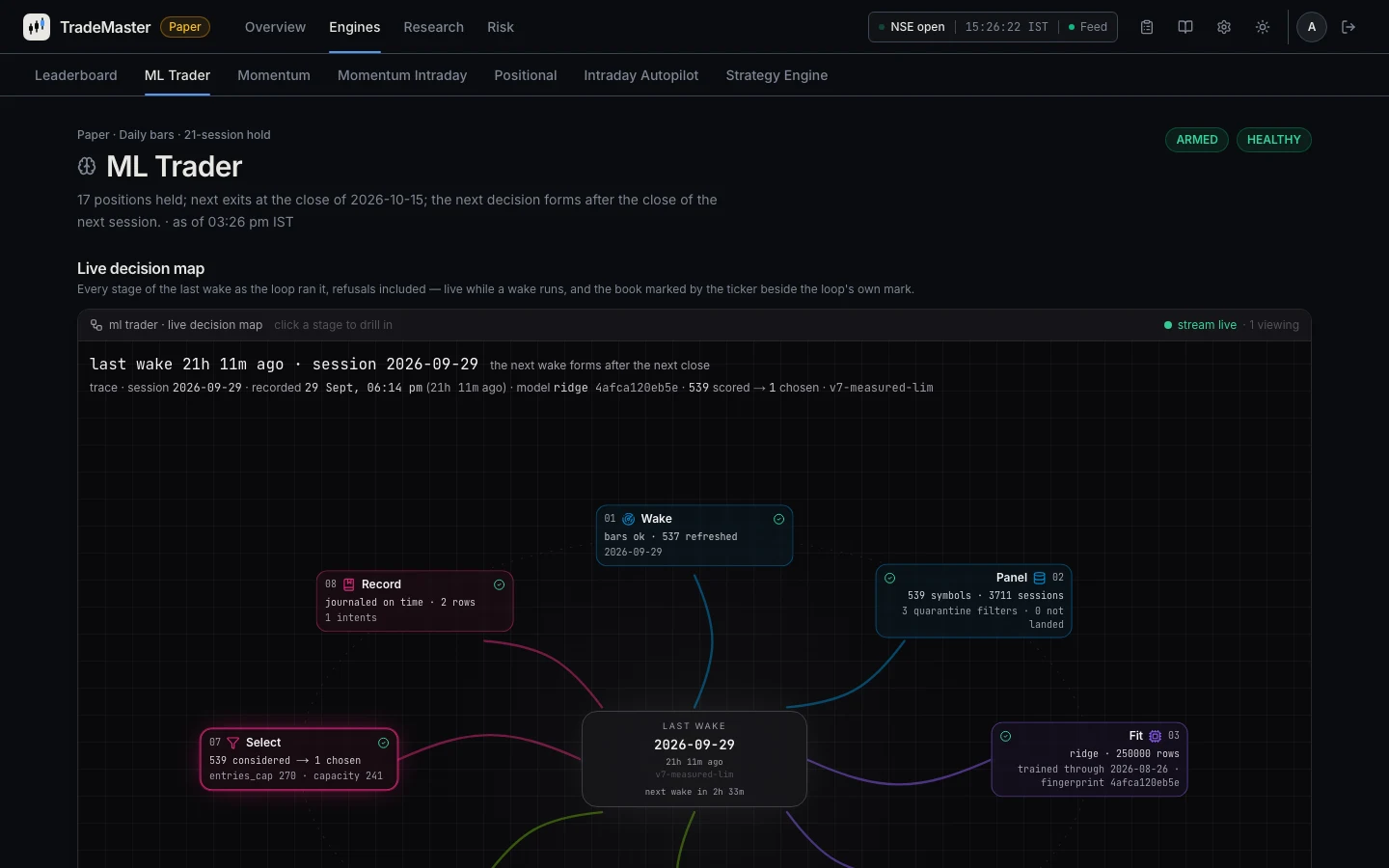
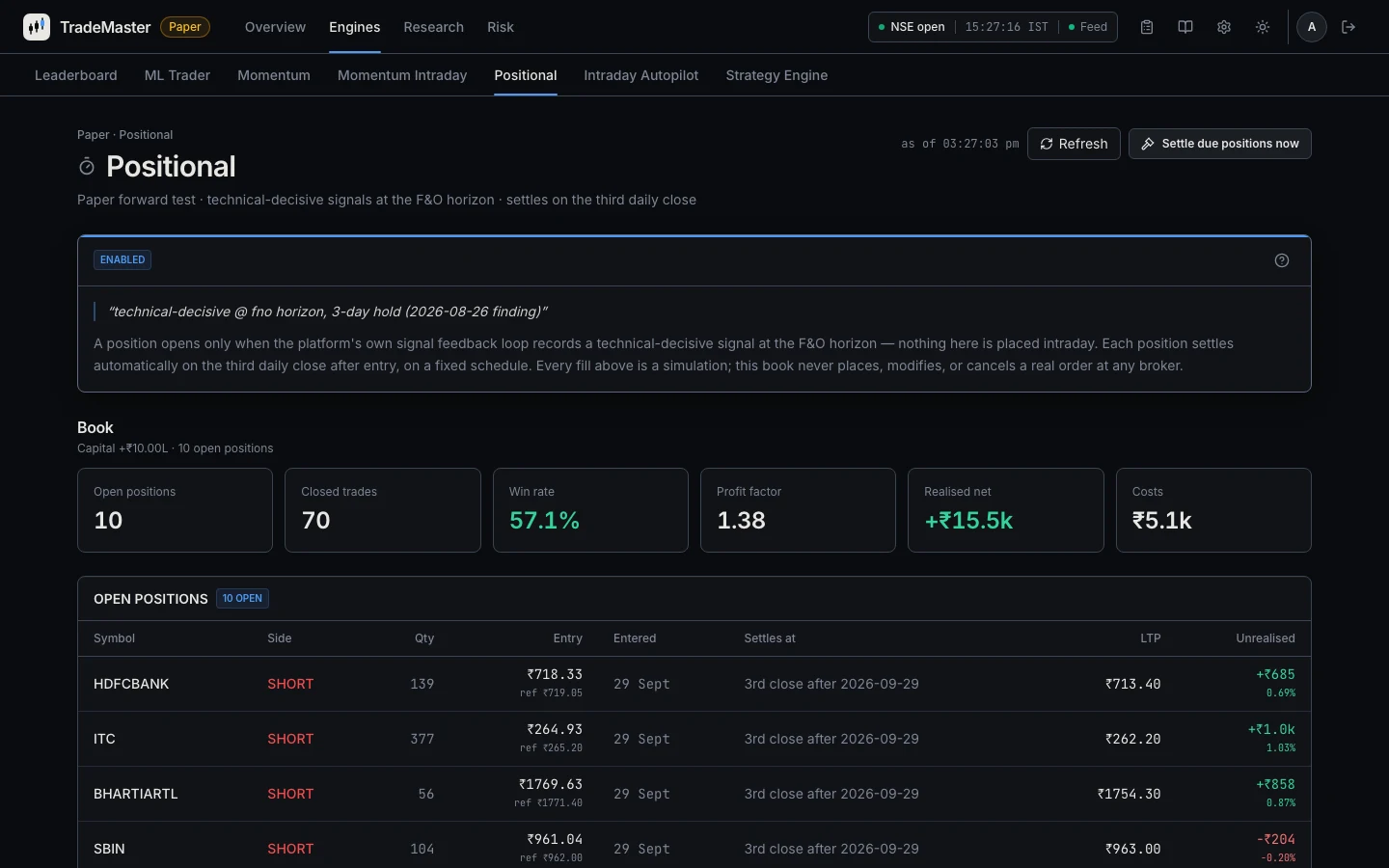
These screens document the public product surface and its paper examples. Their captions preserve when the examples were published and retrieved.
A specific job.
A deliberate shape.
TradeMaster AI treats research judgment as part of the product. The public record covers six paper engines and dated September verdicts, including ideas that failed or were retired and a learned ridge ranker evaluated in a 21-session backtest. Its architecture moves from market ticks and a Yahoo fallback through models, engines and paper books, applying Indian cost assumptions and measured slippage before the research judgment. Everything remains paper-only: useful evidence for what to test next, not proof of live-capital performance.
What this means for youWhat Kinetivy would bring to a project like yours: product direction, dashboard design and workflow implementation, built to scale down to what your business can actually run and afford.
Three choices
you could reuse.
- 01
Publish the failed verdict beside the surviving idea.
The public record distinguishes failed and retired strategies from the learned ridge ranker’s dated backtest instead of turning every experiment into a success story. For your product, that means a decision record that preserves what the evidence ruled out as clearly as what moved forward.
For youA product record that keeps rejected ideas visible, so learning survives beyond the experiment that produced it.
- 02
Put every engine through the same cost context.
Paper books apply the same Indian trading-cost assumptions and measured slippage before results reach the research layer. In your workflow, shared assumptions make comparisons inspectable and stop a favourable result from quietly using an easier yardstick.
For youA common cost and assumption model that makes competing approaches comparable.
- 03
Make the reasons to stop visible.
Halt, drift and loss gates sit in the architecture alongside signals and paper books. For any automated or AI-assisted system, the stopping condition belongs in the interface and the operating model, not in a document someone has to remember later.
For youVisible halt, drift and loss gates that tell operators when the system should stop or be reviewed.
Read the build
through its evidence.
Read the research verdicts
The public record dates its judgments and separates failed or retired work from the 21-session learned-ranker backtest.
Trace the operating chain
The case study follows ticks and fallback data through models, six paper engines, cost-aware books and research judgment.
Inspect the product views
Public Overview, ML Trader and Positional captures show how the research and paper state are presented without opening a signed-in account.
The next build
could be yours.
Every decision on this page can be pointed at your business instead: your visitors, your data, your next release. Start with a free, editable Project Blueprint, kept in your browser. No email needed.
A good idea starts with a conversation.
Tell us the one thing you want to move forward. A short inquiry is enough to start.